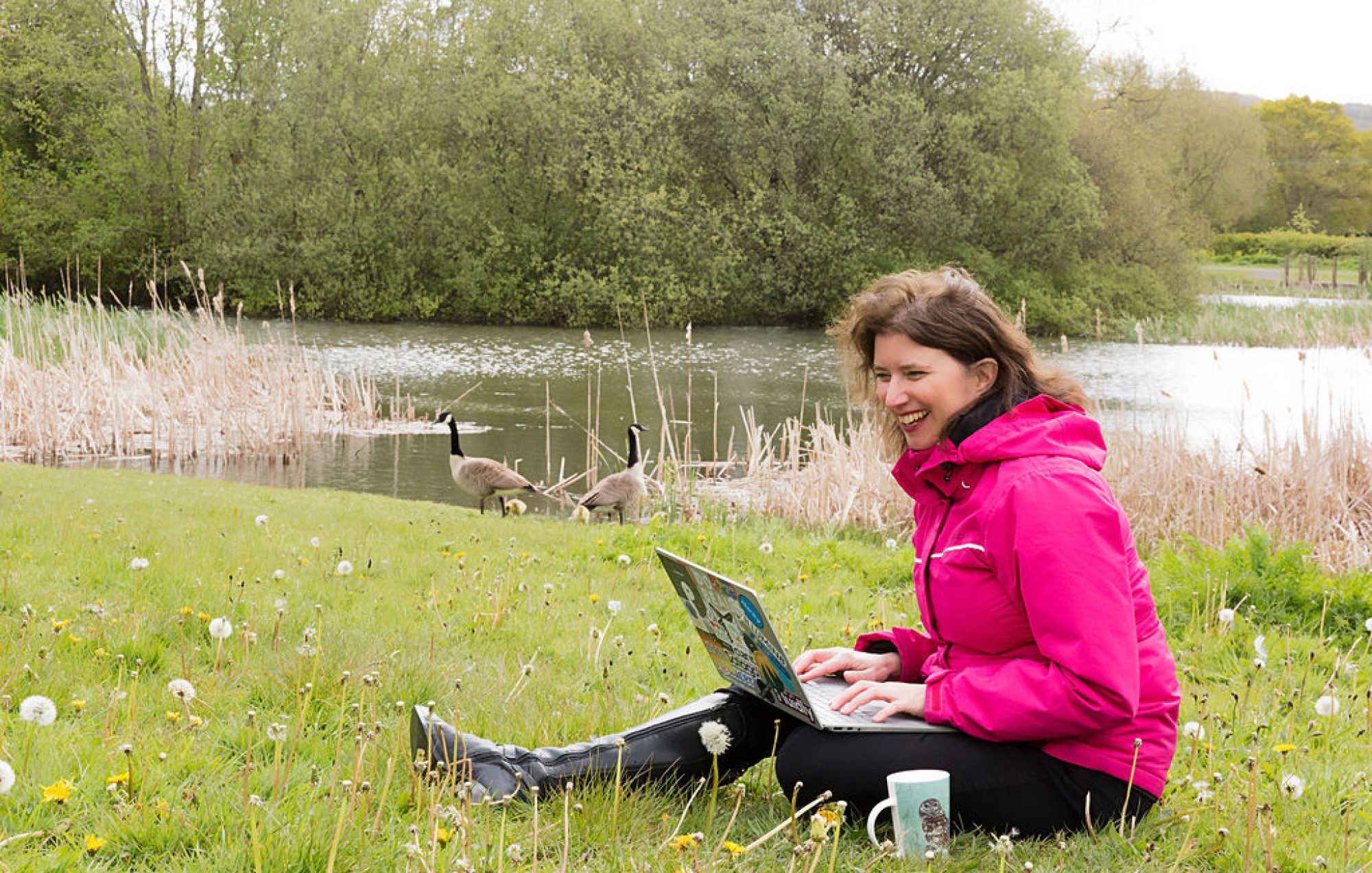
| People are more important than things This is one of my fundamental beliefs although it may sound a little odd for an accountant who primarily advises people how to grow their business and/or how to make it more profitable. But many of the techniques we use to make a business less dependent on its owners in order to scale are the same ones that we use to make owners less essential so that they can have a better work life balance. It is really important to me WHO I work with as it’s about far more than money. While it is important to enjoy our work I also believe that we do our best work for people we like and where we are a good fit. That’s why I only accept about half the people who ask me about coaching. Sometimes it’s the wrong type of business, or they require different expertise, or it may just be that I don’t feel a connection. Because if you don’t trust me you won’t follow my advice. Not that you have to follow my advice but it would be a waste of your money and my time if you NEVER followed my advice. One element of what helps to develop a connection is shared values. We donate 1% of our turnover to charity, we make a donation to fund a day’s education for everybody who attends our free webinars (we like to think that it will encourage the right sort of people to attend), we run a paperless office and, when we can’t avoid travel, we offset. Not surprisingly many of our clients also include charitable donations such as 1% for charity and 1% for sustainability. Or they’re members of B1G1 doing business for good. So, if you’d like to help a girl to receive a day of education please join us for our series of Better Business webinars (for accountants and bookkeepers) or Money Matters webinars for other business owners. Details here. |
Why to enter awards
I love judging awards as I get a sneak preview of what the best accountancy businesses are doing. It’s really exciting to see people pushing the profession forwards. This year I’m fortunate to have been asked to judge both the Accounting Excellence Awards and the Xero Awards. (My atrocious memory means that I immediately forget who has been shortlisted and who has won so you can try bribing me with chocolates as much as you like but I just can’t remember)
I also enter my books into the Business Book Awards. The Numbers Business won first place in its category in 2019 which was a really pleasant surprise for a first time author. Growing by Numbers sank without trace in 2021. And just yesterday Changing the Numbers was shortlisted in its category. We’ll find out if it wins at the big awards dinner on 16 May.
Entering awards can feel like a lot of hassle or you may be afraid of ‘failure’ so why would you put yourself through that?
- Writing out your awards application helps you to realise how much good stuff your business has done.
- An award or shortlist helps you to stand out from your competitors
- Being shortlisted is as good as a win as far as your work is concerned. Making the shortlist is based on how good YOU are. The winner can depend on who else happens to have entered the same year. You might win or lose depending on your competition more than your own work.
- An award or shortlist is great for handling imposter syndrome
- An award is great for publicity as it gives you something to shout about in your local community and amongst your clients. Local papers like to hear good news although you may need a bit of an angle such as your reasons for starting the business or how you have overcome adversity.
Not all awards are created equal. Some seem to be more about making money for the organisers, either in large entry fees or selling tables at awards dinners. If the winner is dependent on paying to attend the dinner then it is not worth it.
But there are plenty of reputable awards out there.
Both the awards I judge and enter are open to anyone whether you can be there in person or not. And, if you can afford it, you can treat your team to a great night out to celebrate all their hard work. Or take along some clients to remind them that they have chosen to work with a (potential) award winner.
So go ahead and enter those awards. And let me know if you need a hand to prepare your entries.
The baby bear amount
Not too much, not too little, but just right.
If you’re reading this then you’re probably like me and read/watch a lot of other business advice books and other resources. Some appear to repeat the same ideas and other appear to offer exactly the opposite suggestions and sometimes it can be hard to figure out what is right for your business.
Should I invest in this course/software which will all but guarantee success or should I save my money and bootstrap? Although I’m generally in favour of wise spending I often have bootstrap moments.
Should I work longer hours just to ‘get ahead’ or would I be better off spending quality time resting like an athlete recovering from a sprint. After all, you can’t sprint a marathon.
You are not the same person as me and your business is not like mine. Mentoring can only get you so far by sharing my expertise. That’s why I’m so pleased that my qualification is coaching AND mentoring. People come to me for my expertise as a mentor who has been there, got the t-shirt and even written the book but the coaching techniques help me to focus on YOUR business for maximum impact. Together we can stop any prevarication, financial waste, and work out the best strategy and actions for your business.
When you’re running your own business it’s too easy to get bogged down in the day to day which is why I also use a business coach to help me view my business more objectively. So far, so good.
What else do you do to devise your business strategy and to keep on track between too much and too little, too sweet and too salty?
I want you to pay more tax
If you make more profit you will usually end up paying more tax BUT you also get to keep more for yourself so everybody wins.
Whilst Minerva Accountants is mainly about the compliance work of keeping businesses legal and providing management information the main business, Hudson Business Advice, is about helping business owners to build a better business.
Whether you want more profits, more time, or to increase the value of your business prior to sale you need to do the same sort of things,
– Systemise the business so that it can run independently of you and can be scaled more easily
– Automate where appropriate as this will minimise manual errors and save time
– Let go and delegate, whether to employees, outsourced services, or experts
You can come along to our free webinars or join me on one of our courses or group or individual coaching. The accountability ensures that you will take action to improve your business. And pay more tax.
Who should really be on Honours Lists?
Every time an Honours List is published e.g. New Year or the Queen’s (now King’s) birthday there is always somebody moaning that the recipients are less deserving than a local or national community hero.
And every year I tell the complainant that they can nominate those heroes.
If there is anybody that you think is deserving of an honour then you can use this link to put their name forward.
Who would you nominate?
How good would they feel?
What other awards can you nominate people for in your industry or local community?
Connecting with people
Have you read ‘The 5 Love Languages’ by Gary Chapman? He talks about the 5 main ways that people demonstrate their love and how they prefer to receive love. It can be applied to all sorts of relationships including parenting. My favourite is acts of service, so I like to do things for people I care for, hence the cooking. I’m not a great gift giver so those thoughtful people who show affection by giving beautifully wrapped gifts probably think I’m a bit reserved.
As always we need to understand how other people view the world so that we can communicate with them in a way that they understand.
How do you make big decisions?
Some people make quick decisions and some people prefer to take their time. Some people make good decisions and others not so good. In my experience the amount of time taken to reach a decision doesn’t show much correlation with the quality of the decision.
When faced with big decisions what do you do?
I usually make a list of pros and cons to be sure that I’ve considered everything and then discover that the length of each list reflects my subconscious preference. So, for me, this is a mixture of a head and also a heart decision.
I can work out any numbers but, like most accountants, I can usually make those numbers support my decision by tweaking the assumptions. This is why I don’t believe it’s worth spending too much time on projections because I can control the inputs to get the results I want. On paper at least. (It is still worth doing rough projections to ensure that you’re not way off target)
When it comes to business decisions I compare the possible outcomes with my initial business objectives to see which will get me closer to my goal. This has proved to be quite reliable in the past.
Another way is to spend 24 hours imagining that you’ve taken option A. This helps you to clarify the implications of that choice as well as to understand how you are likely to feel. Then spend 24 hours imagining that you’ve taken the alternative. This gives insight into which choice will make you happier.
How do you make decisions? Logically or following your gut instinct?
Why Monday morning made me sad
I recently decided to make a concerted effort to stay on top of my emails. Not an Inbox Zero exercise where you just hide them in different folders (I tried it and out of sight is definitely out of mind for me) but actually dealing with them. As part of this exercise, I started measuring how many emails I have in my inbox when I log on in the morning and how many I have at the end of the day. Of course more emails come in throughout the day too but I don’t currently measure these.
It is quite alarming how many emails come in outside of conventional office hours!
Some of these are automated or from clients and colleagues in different time zones or people who, like me, choose to work odd hours but most are not.
And far too many people were working over the weekend so my inbox was jammed when I logged on on Monday morning.
If you’re one of these people and you’re working through necessity rather than choice then I really wish that we could talk. I’ve always run my businesses on an average of 25 hours per week and it breaks my heart to see people working long hours and missing out on family or personal time when I know I can help them.
We have all sorts of options from individual coaching to group coaching and online courses. If you’re really strapped for cash then I run free webinars and write books but frankly, most people don’t take action without a coach of some sort to motivate/nag them.
Have a look at hudsonbusiness.co.uk to see what we have available for accountants/bookkeepers and other business owners and make your business work for you in 2023.
Confidentiality comes as standard
When I joined ICAEW as a trainee accountant sometime back in the dim and distant past I signed up to a code of ethics. Like most accountants I take that code of ethics very seriously as I believe it is part of being a professional. Amongst other requirements was confidentiality. Everything is confidential so the extent that ICAEW suggest that I shouldn’t even share the names of my clients without their permission, let alone information about their business.
So it was quite a surprise when a prospective client asked me whether our conversations would be confidential. It felt a little like somebody asking whether I like tea (I’m a self-confessed tea addict). It is something so ingrained that I hadn’t even realised that lay people may not know this.
Which got me wondering what else we don’t share as we take it for granted.
We’re so busy focusing on what differentiates us from our competitors that we forget some of these other positives that are shared by many of our competitors.
Anyone can call themselves an accountant, but ‘chartered accountant’ is a protected title in law. I’m proud that I’m not just a chartered accountant but a Fellow and also an elected member of ICAEW Council helping to shape the future of the profession. But we need to make more of this.
Most professional accountancy bodies have similar codes of ethics whereas unqualified accountants or those not belonging to any professional body are not bound by any such code but dependent on the individual’s personal integrity. We’re supervised by our professional bodies so clients have recourse if they believe that we have failed to live up to those standards. We are required to undergo checks to ensure that we are ‘fit and proper’ persons. And we are also required to have professional indemnity insurance in order to protect our clients in the event that we make a mistake.
I have also signed up to a code of ethics as a member of the PSA (Professional Speaking Association) which means that I pay for copyright to use pictures on any slides so that the event organiser won’t be sued. Similarly for any music and videos I use in my talks. It’s not something that most speakers think about and they may not even realise the importance of paying royalties to the creators of those media.
What mundane things do you do instinctively to protect your clients? Can it become part of your marketing?
I am strong but I am tired
| It happens to most of us at some point. November seems to be a busy month for me these days and I’m getting used to it. In the same way that December was busy when I ran a bigger accountancy practice alongside having to do all the family and school Christmas stuff. Many accountants extend this busy period into January too. There may be other busy periods in your life due to business or home peaks. If you know they will only last for a short period then it is okay to power on through. (It is NOT okay if busyness is the norm!) It is okay to feel tired. It is not a weakness. So here are a few tips to get through busy periods. Not all of them will be possible but hopefully one or two will help you. 1. Plan ahead and clear the decks as much as possible beforehand 2. Update your systems and processes in the quiet periods to make your busy period as easy as possible. This is why we run two strategic planning days in the new year. January for business owners and February for accountants (Check out our website or reply to this email for more info) 3. Learn to say “no”. If it doesn’t have to be done in your busy period then say “no” or “later”. 4. Balance your whole load. If you are having a busy period at work then be gentle with yourself at home. Your family can survive on oven meals for a short period and they may even see it as a bit of a treat. Your housework will also wait for you or get your kids to help out (it’s probably better than nothing and will train them for later life) 5. Ask for help. This may be from family, friends or employing extra help. 6. Buy extra time. I have two wonderful cleaners who work wonders on my home once a week so that I am free to get on with my work or to do something for me. 7. Try to take some rest and time for yourself. Even in your busy periods try to take at least one day off for you each week. And remember that working late will leave you too tired to work productively the next day so better to finish a bit earlier and get a good night’s sleep. 8. Remember to eat, sleep, hydrate and exercise to keep yourself as strong as possible. 9. Find a way to relax quickly. What are the quick, simple pleasures in your life? I like a bubble bath or a walk by the sea or a massage (anyone else get tense shoulders hunching over their desk?). None of these need to take much longer than 30-60 mins but they make a world of difference. Please feel free to send me any other tips for this list. |